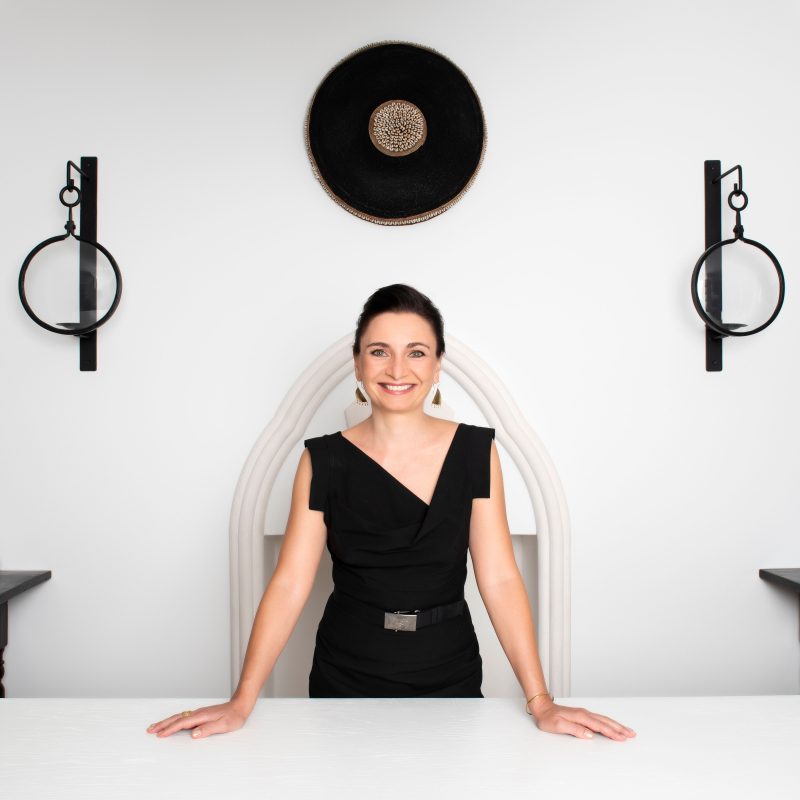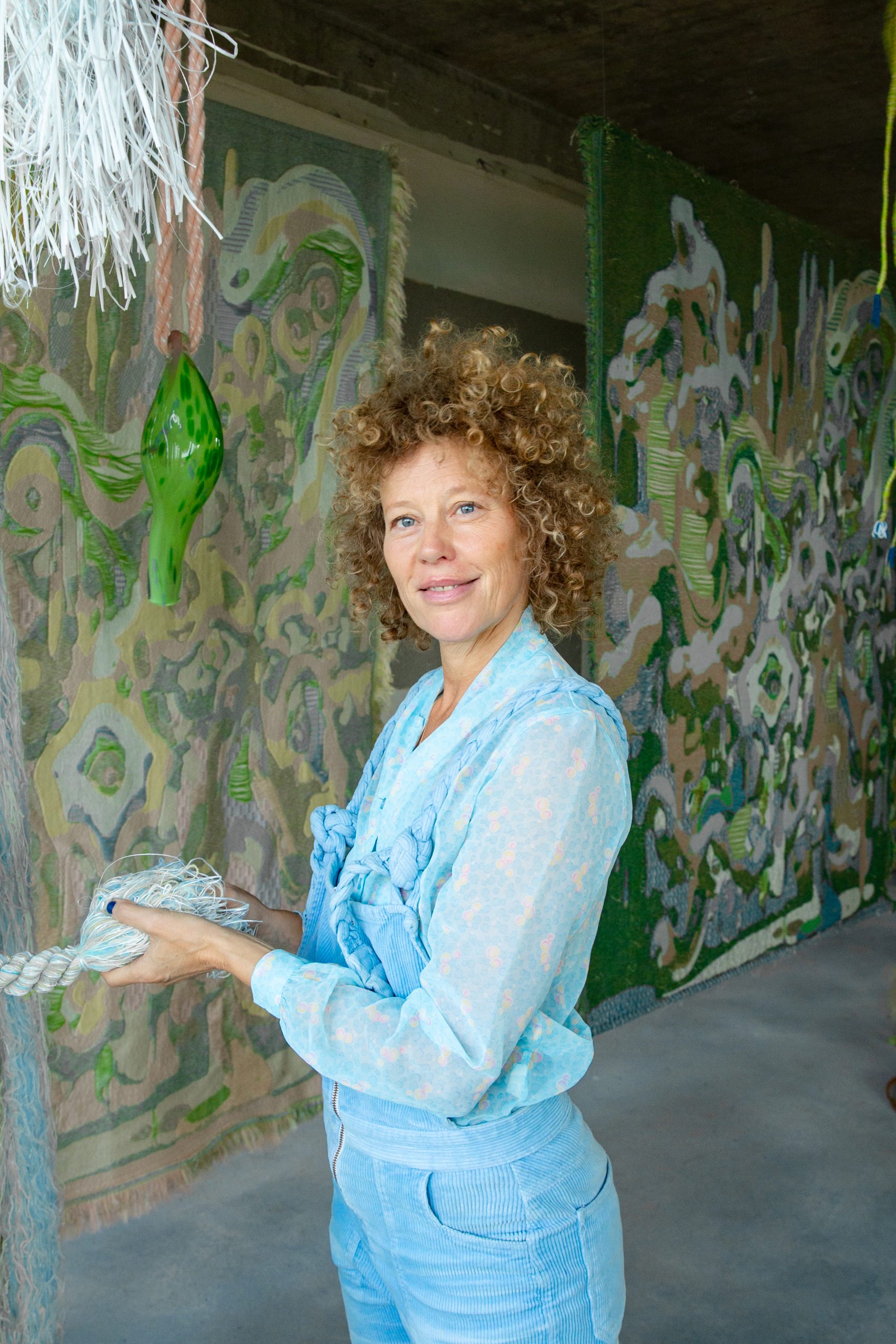
Sandra Keja Planken makes work that sits somewhere between organism and object — woven structures that pulse like living tissue, glass that somehow looks like it could give, installations that move between dreamscape, memory and ecological body. She is a Dutch contemporary artist working across textile, glass and immersive installation. Her base is the Netherlands. What she makes is harder to place.
Her practice has one consistent preoccupation: how sensory experience, tactility and material presence can restore emotional connection within an increasingly detached visual culture.
How she got here
Planken’s work emerged from a fascination with how people emotionally and physically relate to spaces, materials, nature and each other. Growing up between the emotional openness of Spanish culture and the restraint of Northern Europe, she developed an early awareness that certain environments feel alive while others feel strangely absent. That sensitivity never left her. It became the question she keeps asking in material form.
She first came to textile because of its tactility and emotional presence. Threads, knots and woven structures felt almost human. Over time the work expanded — from objects into sculpture, from sculpture into installation, from installation into immersive environments that surround the viewer entirely.
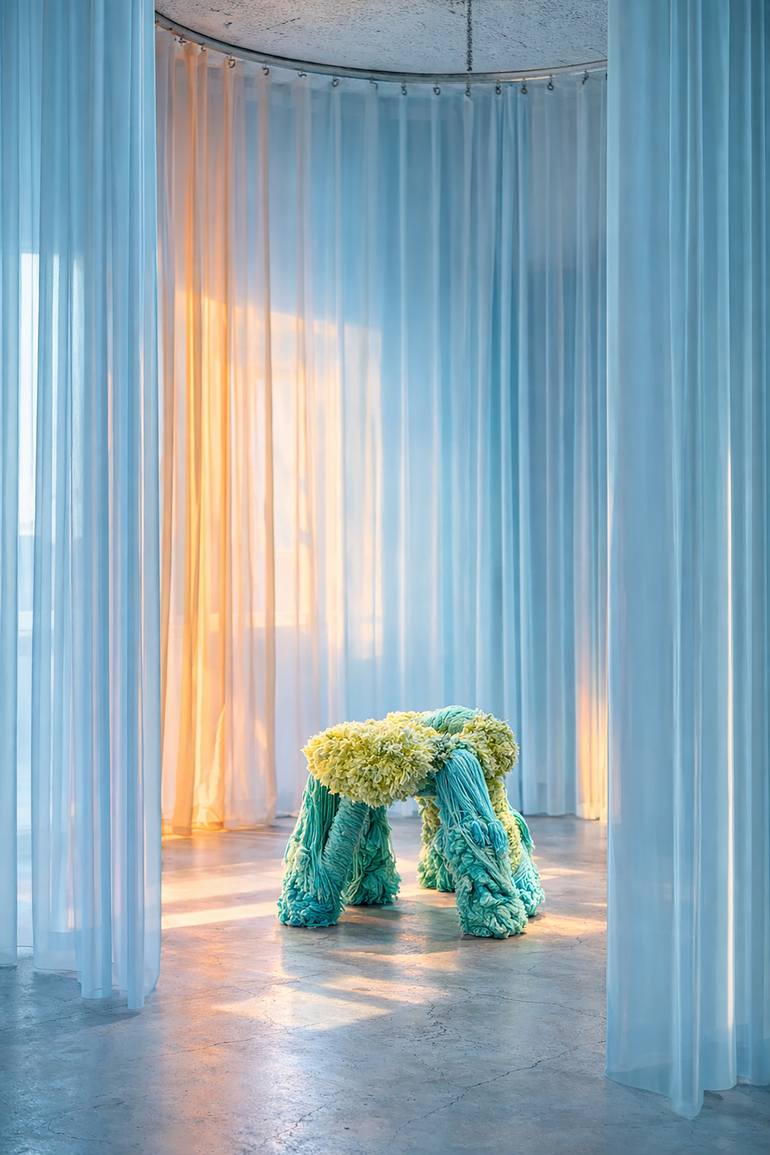
Glass entered her practice later, as a material that could hold fragility, reflection and light. She became fascinated by the tension between textile and glass — how softness and hardness could begin to dissolve into each other. Through experimentation, the work slowly evolved into sensory installations where materials behave almost like living organisms.
Nature, coral ecosystems and ecological transformation became increasingly defining influences. Today her work exists somewhere between sculpture, installation, organism and environment — interested not only in representing nature, but in exploring how art itself can participate in processes of care, regeneration and emotional reconnection.
The process
Her process usually begins with observation: atmosphere, fragments collected from the world. Light reflections, underwater movements, flowers, seaweed, forgotten materials, emotional tensions inside spaces — these become starting points. She works intuitively rather than from fixed outcomes. Materials themselves guide much of the process. She moves between textile, glass, drawing, weaving and sculptural experimentation, allowing forms to slowly evolve almost like living systems.
Tactility plays an essential role. Textile invites physical closeness and vulnerability, while glass allows her to work with reflection, fragility and the sensation of suspended light. She is particularly interested in the moment where materials begin to emotionally contradict themselves — where glass appears soft, or textile starts behaving like architecture or organism.
The works grow layer by layer through accumulation, transformation and material dialogue. Light becomes the final collaborator within the installation, continuously changing the atmosphere depending on the viewer, the environment and the time of day.
“I wish more people understood that being an artist is not only about creating objects, but about learning how to remain deeply sensitive within a world that constantly pushes towards speed, distraction and sameness. Most artworks are built through years of experimentation, doubt, observation and invisible labor. The final piece often carries countless emotional and material decisions that are never immediately visible on the surface. I also believe artists help create emotional and cultural space within society. Art can slow people down, reconnect them to wonder and allow them to experience the world differently for a moment. In a time where so much becomes flattened into fast images and algorithms, I think sensitivity and imagination become increasingly important.”
— Sandra Keja Planken
The object
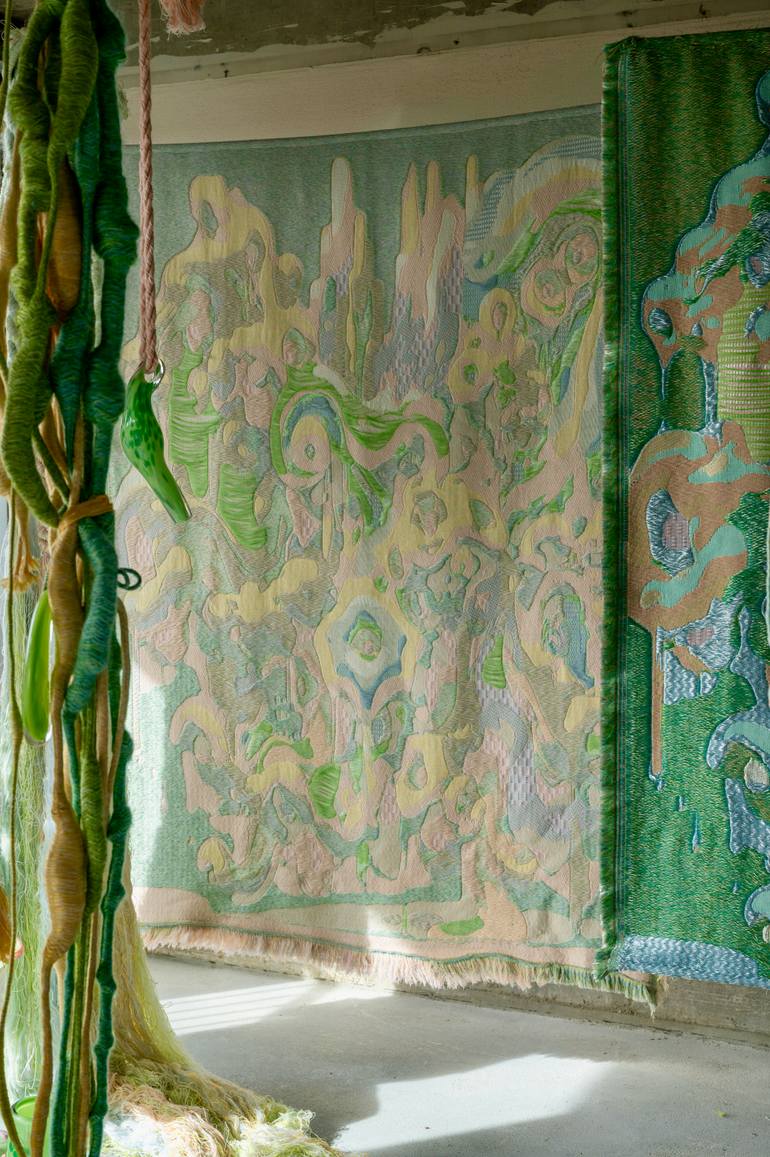
Weaves of Saltwater Dreams is the installation we keep returning to. Presented at BIG ART Amsterdam in collaboration with ValorosaViva, it is a coral art installation that refuses easy categorisation. A large woven tapestry — green, cream, copper, teal — unfurls like a submarine cartography: part reef, part hallucination. Ropes hang alongside it, elongating into sea-creature forms. The textiles ooze and shimmer. They are not depicting the ocean floor. They are rehearsing a return to it.
Every yarn is recycled or donated — discarded wardrobes, forgotten stock — reborn as coral topography. This is not incidental. Through her ongoing universe Nature’s Visual Sound, Planken is currently growing heat-resilient algae and corals with the Branch Foundation and the University of Wageningen, on glass and textile structures designed to function as temporary habitats on the seabed. The work does not ask you to care about the environment. It makes you feel something first, and lets the caring follow.
Ten percent of every acquisition goes directly to the underwater reef art project.
Our Hint
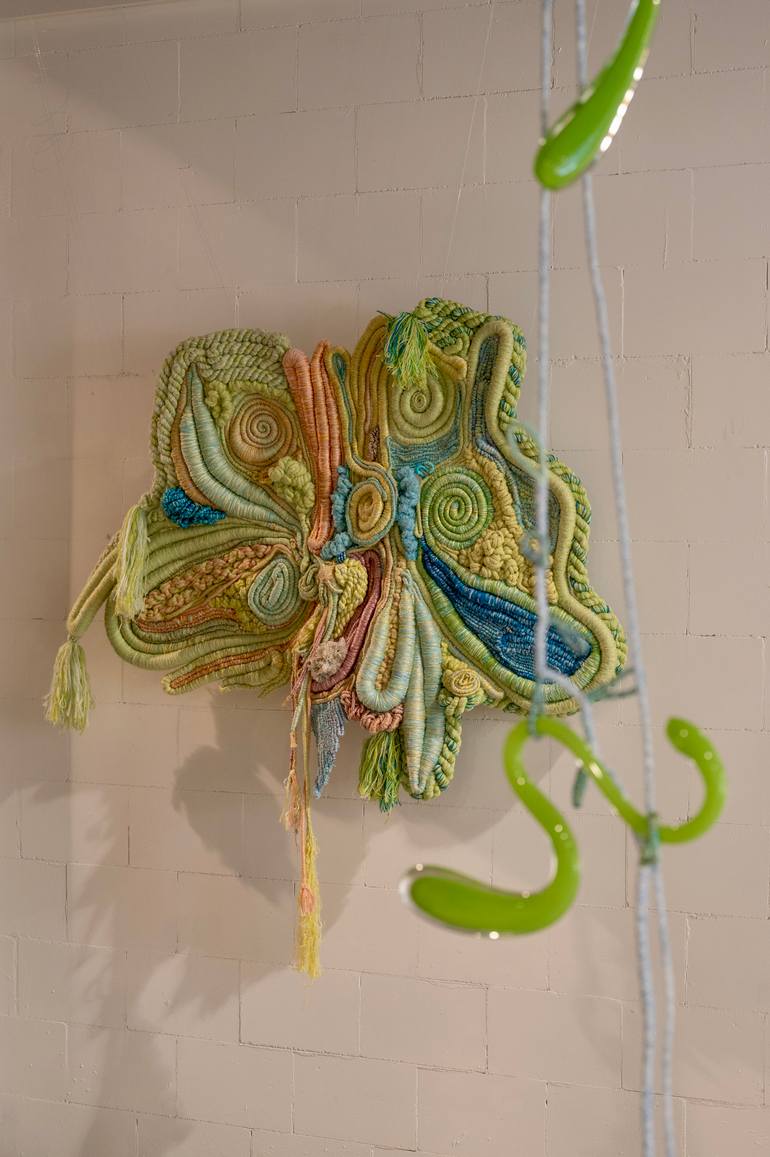
“Coral Butterfly” Sculpture
Sculpture, Weaving of Wool
55 W x 40 H x 2 D in
Recycled and donated yarn, woven textile, mixed fibres — dimensions variable
10% of every acquisition goes directly to the underwater reef art project.