Studio Visit — No. 07
Regen Studio didn’t begin with a launch. It began with a pattern — a shared sensibility that kept appearing across architectural projects, in the custom pieces designed to solve specific problems within specific spaces. At some point the continuity became impossible to ignore. The studio emerged from the decision to give that continuity a name.
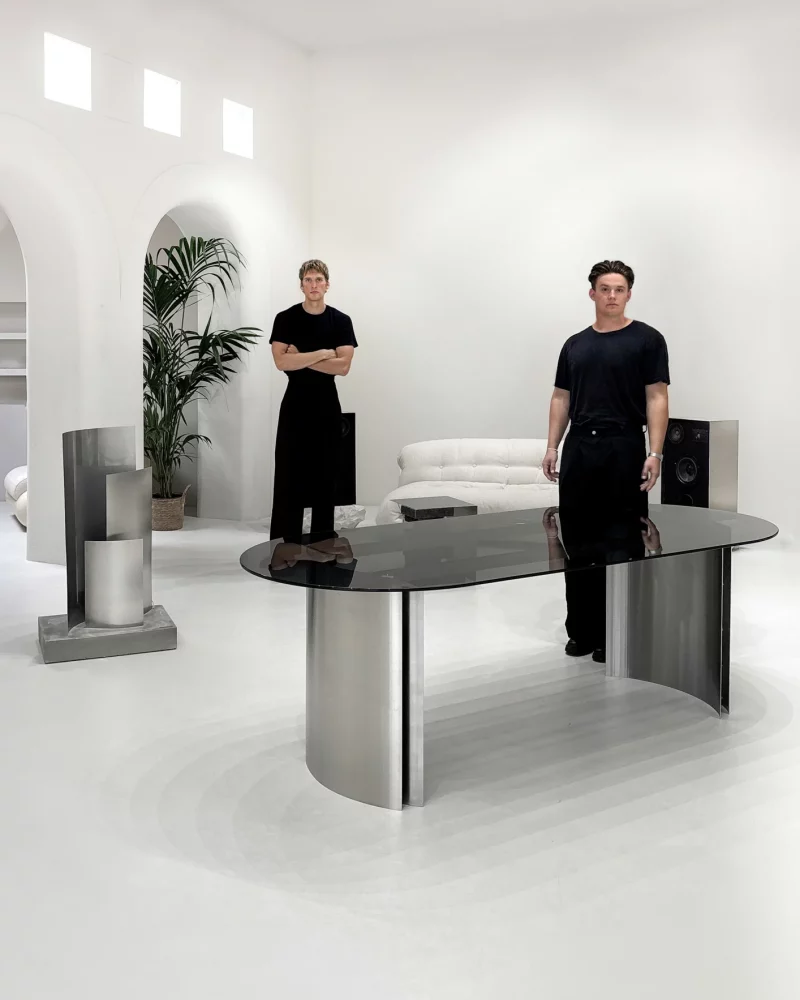
Based in Türkiye, Regen Studio is a design practice and furniture brand founded on an architectural approach and rooted entirely in handcraft. Every piece is made to order by skilled local artisans. Nothing is produced at scale. The work is collectible in the truest sense: made once, made well, made to last.
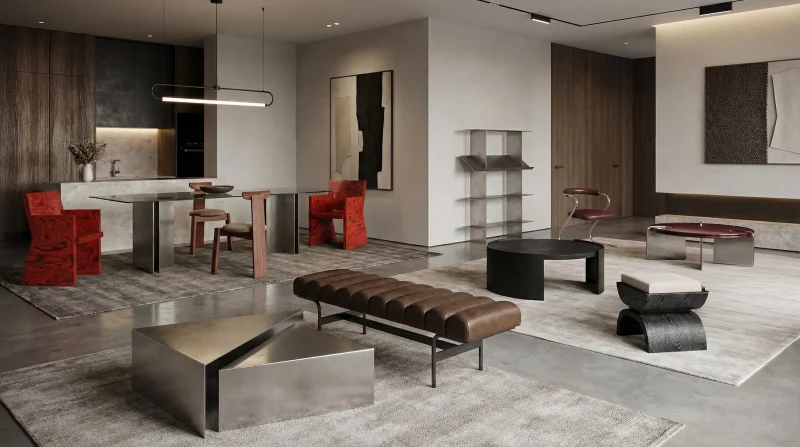
How it started
The idea didn’t arrive in a single moment. Regen’s founder is an architect, and for years her practice involved designing custom furniture and spatial elements for clients — pieces created initially to solve specific needs within specific projects. But those pieces began to accumulate a shared logic. The same way of thinking about proportion, material, atmosphere. The same instinct for what an object should feel like within a room.
Regen Studio emerged from the desire to give that continuity its own structure — to develop it as an independent design practice, separate from client briefs, free to follow its own language wherever it led.
The maker
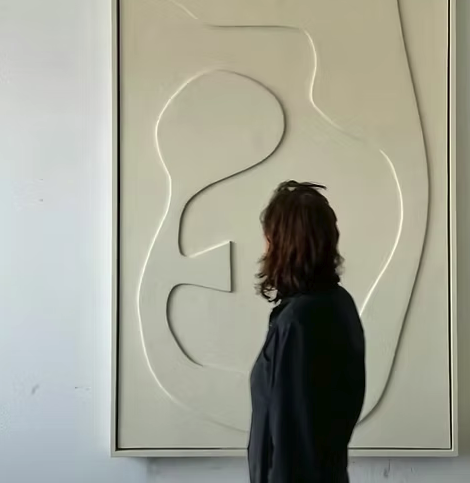
Regen’s founder trained as an architect, and that foundation shapes everything about how the studio works. Furniture, in her practice, is not separate from architecture — it is an extension of the same thinking. Proportion, spatial relationships, the way an object holds or releases the atmosphere of a room. These are architectural questions answered in wood, metal, colour, and texture.
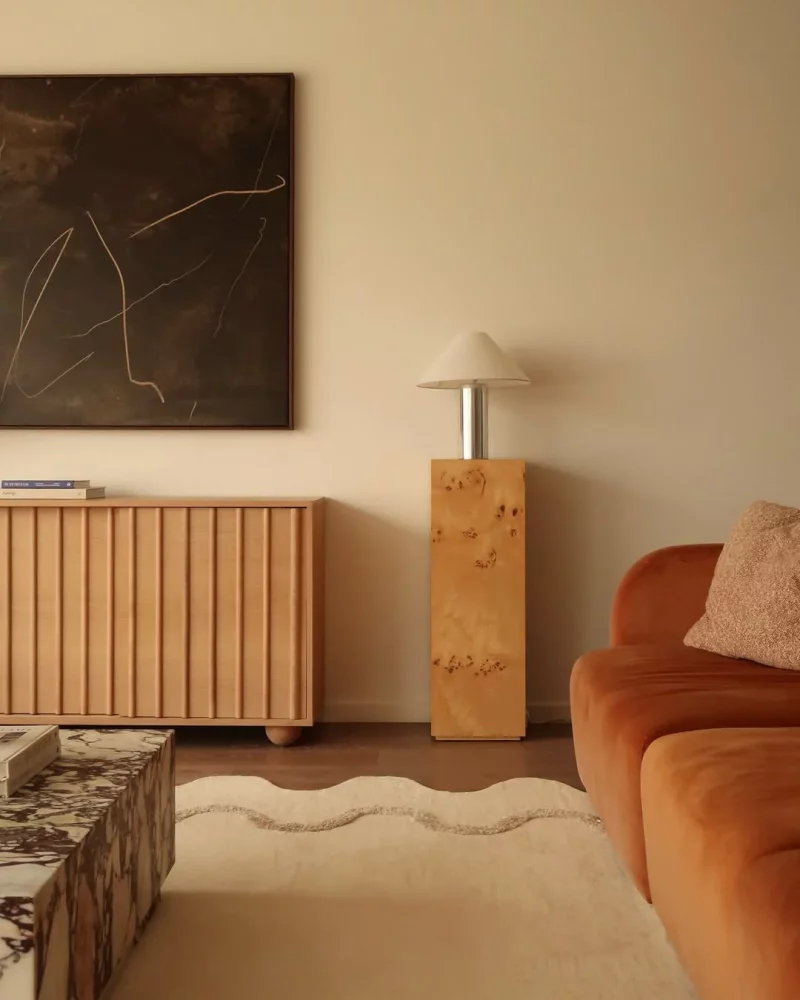
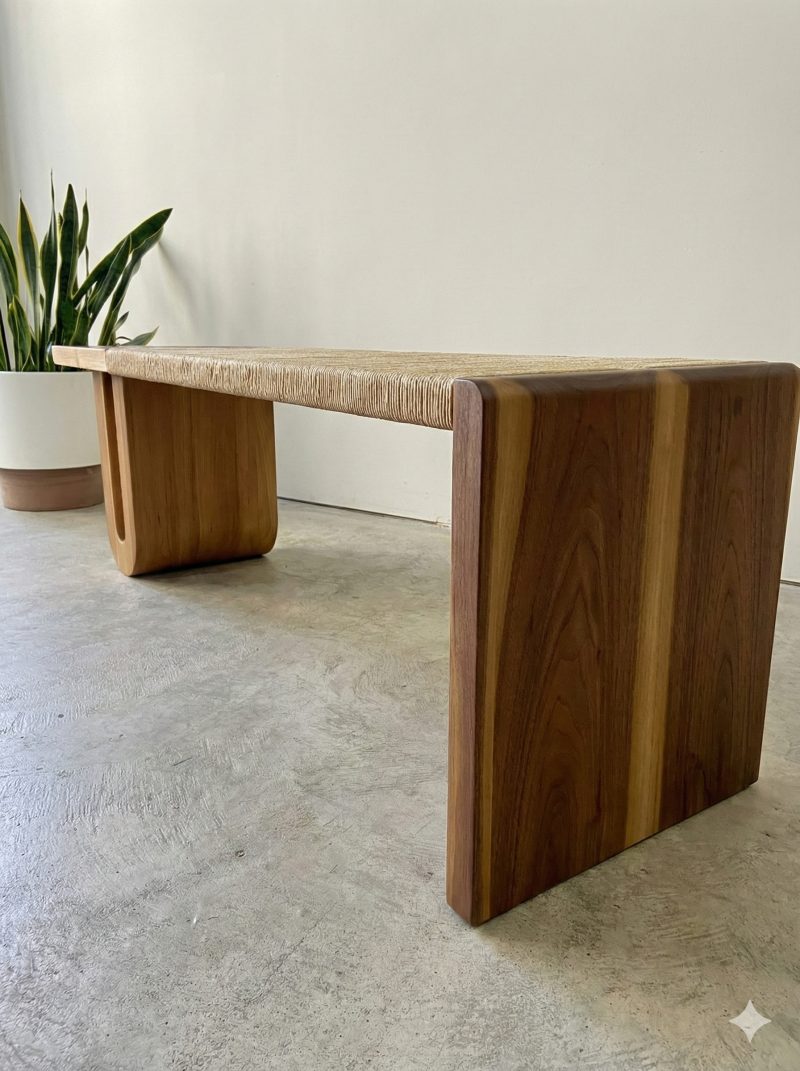
The studio draws heavily from mid-century modern design — its balance of organic form, functional clarity, and timeless use of material. But Regen is equally interested in what has been forgotten: techniques and materials that were once widely used and then set aside. The aim is not nostalgia. It is reinterpretation — familiar materials reimagined through a contemporary design language, creating a dialogue between past and present rather than choosing between them.
The process
Every piece begins with context: how it will live within a space, and what kind of atmosphere it should support. Architectural thinking comes first — proportion, function, spatial relationships — before the work moves into form. From there, material exploration takes over. Textures, finishes, combinations. Understanding how a piece can carry both presence and subtlety at the same time.
The process is iterative. Drawing, making, refining. Back and forth until the object feels balanced — visually and emotionally. Collaboration with the workshop is essential throughout. Craftsmanship is not a finishing step. It shapes the final character of each piece from the beginning.
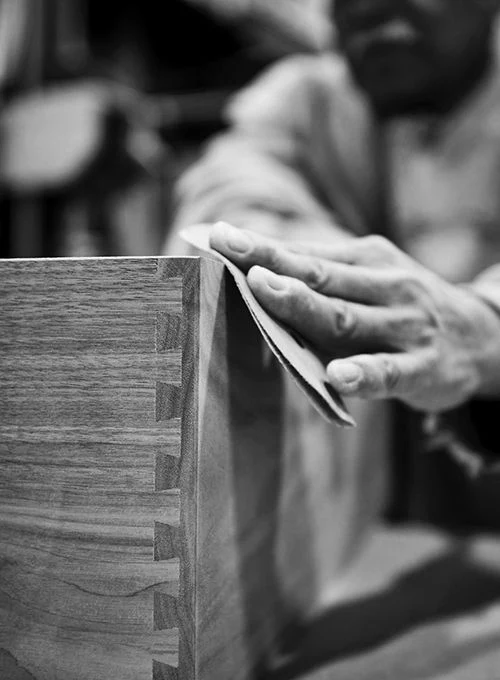
Constraints, too, are part of the method. Many of Regen’s pieces first emerged under real pressure — time, space, material limitations within architectural projects. Those limitations became a source of precision. They pushed the studio toward more thoughtful, more exact solutions. The philosophy held: constraints and context are not obstacles to the creative process. They are essential parts of it.
The object
The Kira chair is the piece that makes the argument most clearly. Root veneer surface. Bold red polish. A form that draws attention without announcing itself — confident, sculptural, entirely its own. Regen describes it as a piece that confidently expresses its own style. That is accurate, but it undersells the restraint involved. The chair does not shout. It simply refuses to be ignored.
Handcrafted and made to order, Kira can be personalised in any polish colour. At 88 × 56 × 63 cm, it has the proportions of something considered at architectural scale — a chair that was designed for a room, not for a catalogue. The kind of piece that quietly shapes the atmosphere around it, and becomes, as Regen puts it, a mirror of the person who lives with it.
Our Hint
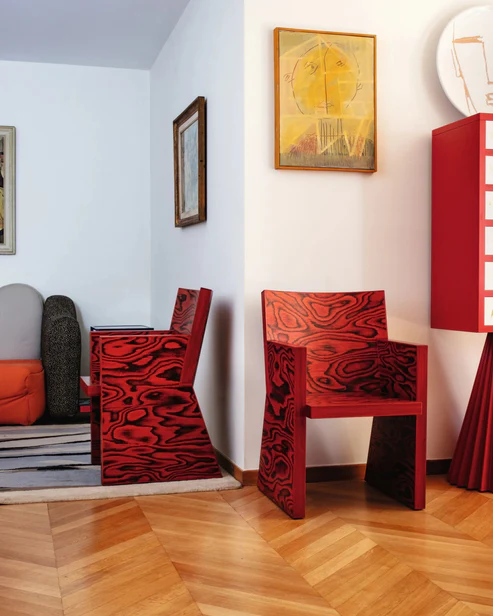
Kira Chair — Regen Studio
Root veneer, wood veneer construction, handcrafted — 88 × 56 × 63 cm — customisable polish colours — made to order
Made in Türkiye by local artisans. Delivery 2–4 weeks.